
Published on: 16 November 2026
Noticing one leg swollen while the other looks normal is understandably worrying, and it deserves more attention than swelling in both legs. One-sided swelling usually points to a problem within that limb, such as a blood clot, a vein that is not draining well, an infection or an injury. Deep vein thrombosis (DVT) is the cause doctors rule out first, but it is far from the only explanation. Knowing the differences helps you decide whether to rest it, see your GP or head straight to A&E.
Key Takeaways
- Swelling in only one leg usually comes from a problem within that limb, while heart, kidney and liver conditions tend to affect both legs.
- Deep vein thrombosis (DVT) is the first cause to rule out, especially when swelling is sudden, painful and warm.
- Chronic venous insufficiency, a past clot and iliac vein compression can cause longer-standing swelling, often with little pain.
- Cellulitis, gout, a ruptured Baker’s cyst, injury and lymphoedema can look similar but need different treatment.
- A duplex ultrasound scan is the standard test to confirm or exclude a clot in the leg.
Why Swelling in Just One Leg Deserves a Closer Look
Conditions that affect the whole body, such as heart failure, kidney disease or certain medications, usually make both legs swell. When only one leg is affected, the cause is usually local, such as slowed blood or lymph flow, or inflamed tissue.
How quickly the swelling appeared is a useful clue. Swelling that comes on over hours or a day or two suggests an acute cause such as a clot or infection, while swelling that has crept up over months, worse by evening and better after sleep, more often points to the veins.
Go to A&E If You Notice Any of These Signs
Go to the nearest A&E, or call 995 for an emergency ambulance, if leg swelling comes with:
- Sudden breathlessness, chest pain or coughing up blood, which can signal a clot that has travelled to the lungs
- A racing heartbeat or feeling faint
- A leg that is cold, pale, numb or extremely painful
- Rapidly spreading redness and heat with fever or chills
- Severe, tight swelling after an injury, or pain that feels far worse than the injury itself
If the swelling is sudden and painful without these signs, see a doctor the same day. Until a clot is ruled out, raising the leg is fine, but avoid massaging the calf or starting compression stockings.
Is One Swollen Leg Always a Blood Clot?
No. A clot is the most important cause to exclude, but most people checked for one turn out to have something else. In a randomised study of 1,096 outpatients assessed for suspected DVT, about 1 in 6 were found to have a clot in the leg or lungs.
Signs That Point Towards DVT
- Swelling that came on suddenly, in the calf or the whole leg
- Calf pain or tenderness, sometimes only when standing or walking
- Warmth and redness over the swollen area
- A recent trigger such as surgery, a hospital stay, a long-haul flight, pregnancy, hormonal medication or cancer treatment
- A previous clot or a family history of clots
How a confirmed clot is treated is covered in our deep vein thrombosis guide.
Vein-Related Causes of One-Sided Leg Swelling

Not every vein problem is a clot. These causes build up more slowly, often over months, and are easy to miss because the swelling can seem mild at first.
Chronic Venous Insufficiency
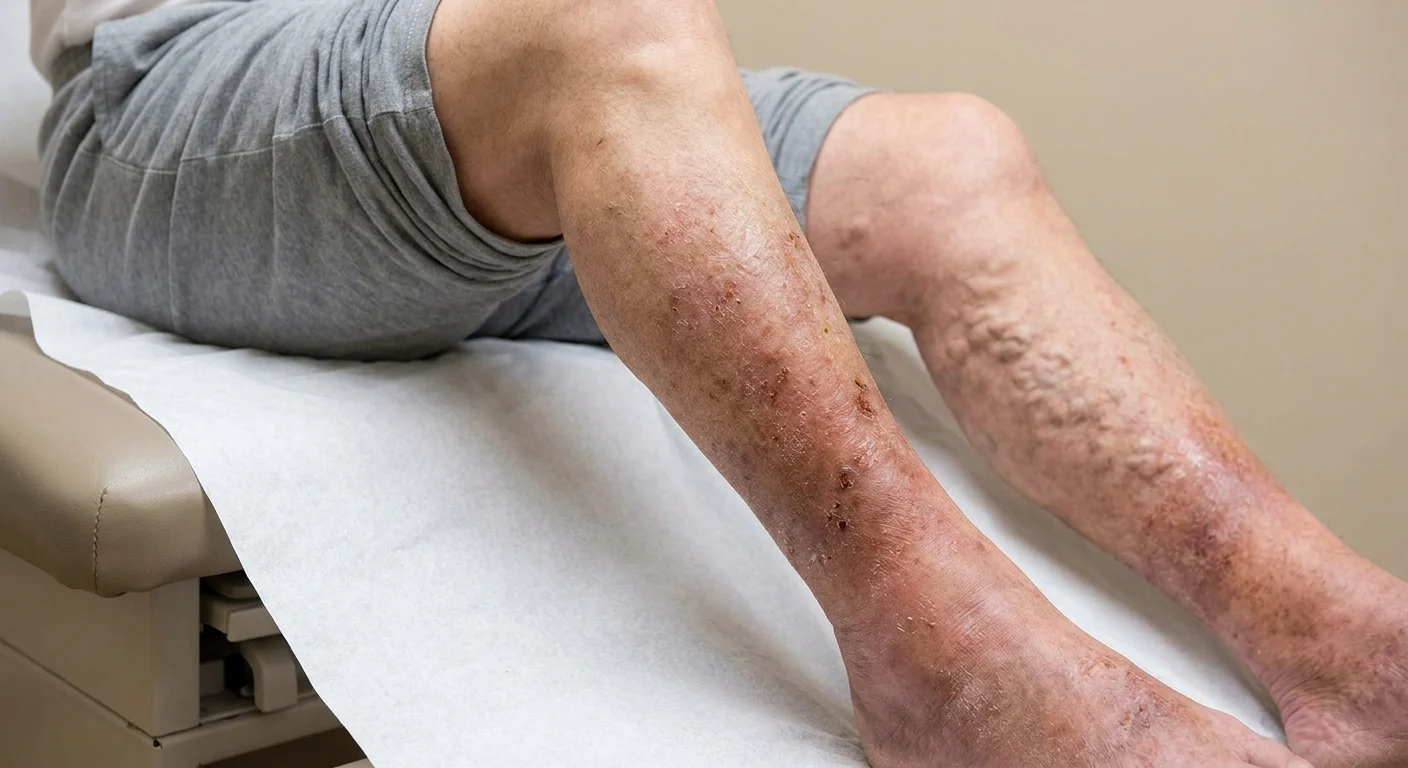
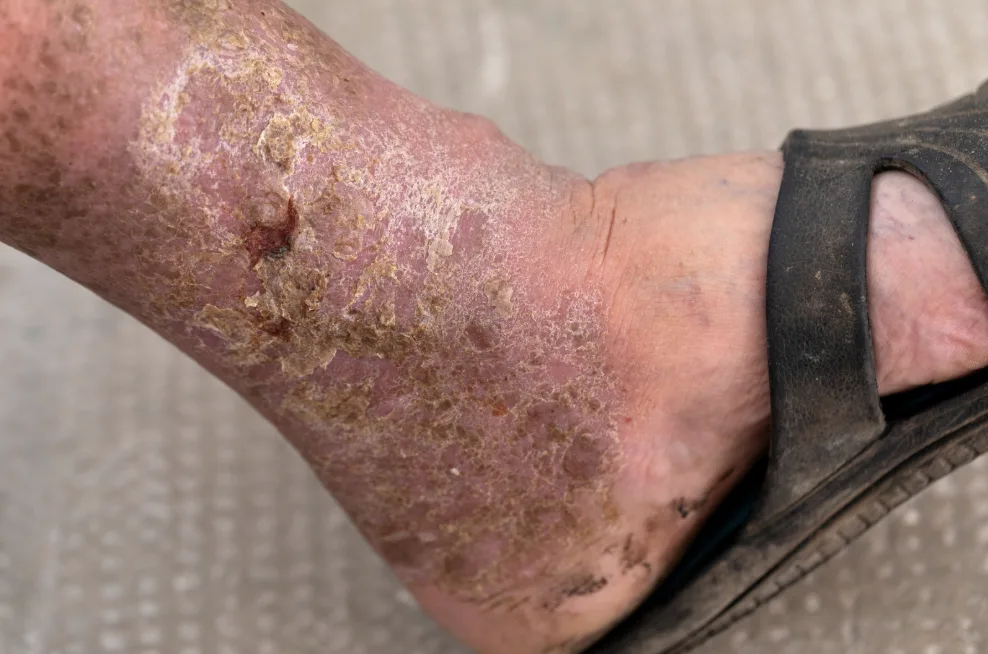
When valves in the leg veins weaken, blood pools in the lower leg, and one side is often worse than the other. The swelling builds through the day, eases overnight and may come with heaviness, visible varicose veins or brown staining near the ankle. Our chronic venous insufficiency guide explains how the condition progresses.
Post-Thrombotic Syndrome
A previous DVT can damage the valves in the deep vein it affected. Months or years later, that leg may swell, ache and feel heavy, even though the clot itself has long gone.
Iliac Vein Compression
In some people, a large vein in the pelvis is squeezed by an artery crossing over it, a pattern known as May-Thurner syndrome. It more often affects the left leg, so left-sided swelling is worth checking, and it can raise the risk of a clot.
Other Causes Outside the Veins
Several other conditions can swell one leg, as this primary care review of leg swelling sets out. Each needs its own assessment, usually starting with your GP:
- Cellulitis: a skin infection causing a red, hot, tender area that may spread, often with fever. See a GP promptly, as antibiotics are usually needed.
- Gout: sudden, very painful swelling and redness around a joint, often the big toe or ankle. See a GP, as it needs different treatment from a vein problem.
- Ruptured Baker’s cyst: a fluid sac behind the knee bursts, causing sudden calf pain and swelling that can mimic a clot. A scan tells them apart, so see a doctor.
- Injury: a pulled calf muscle, sprain or deep bruise can swell one leg after activity. See a GP or physiotherapist if it does not settle.
- Lymphoedema: firm swelling from poor lymph drainage, sometimes after cancer surgery or radiotherapy in the pelvis or groin. See your GP for referral to the right specialist.
One Leg Swollen but No Pain: What Could It Be?
Painless swelling in one leg usually points to a slower, long-standing cause, such as chronic venous insufficiency, post-thrombotic syndrome, lymphoedema or iliac vein compression.
It still deserves a check, because a clot does not always hurt and some people with DVT notice only swelling or heaviness. Swelling that keeps building, does not settle overnight or comes with skin staining should be assessed with a duplex scan.
If a vein cause is confirmed, compression stockings often help. Our compression socks guide explains how to choose them.
How Do Doctors Check a Swollen Leg for DVT?
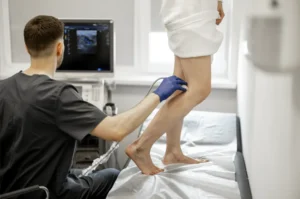
Doctors combine a clinical risk score, a D-dimer blood test and a duplex ultrasound scan. The score estimates how likely a clot is, the D-dimer helps rule one out in lower-risk patients, and the ultrasound shows the veins directly.
The Wells score considers factors such as recent surgery, whether the whole leg is swollen and whether the calf is 3cm or more larger than the other side. In the study above, patients judged unlikely to have a clot who also had a negative D-dimer could safely have DVT ruled out without a scan.
During an assessment at our Singapore clinic, a duplex scan of the leg veins takes around 20 to 30 minutes and checks for both a clot and valve reflux.
Getting a Clear Answer About Your Swollen Leg
If you have new or unexplained swelling in one leg without the emergency signs above, book a DVT risk assessment with the specialist team at Vascular & Interventional Centre. If the swelling came on suddenly and you cannot be seen today, see a GP or go to A&E rather than waiting for an appointment.