
Published on: 23 September 2026
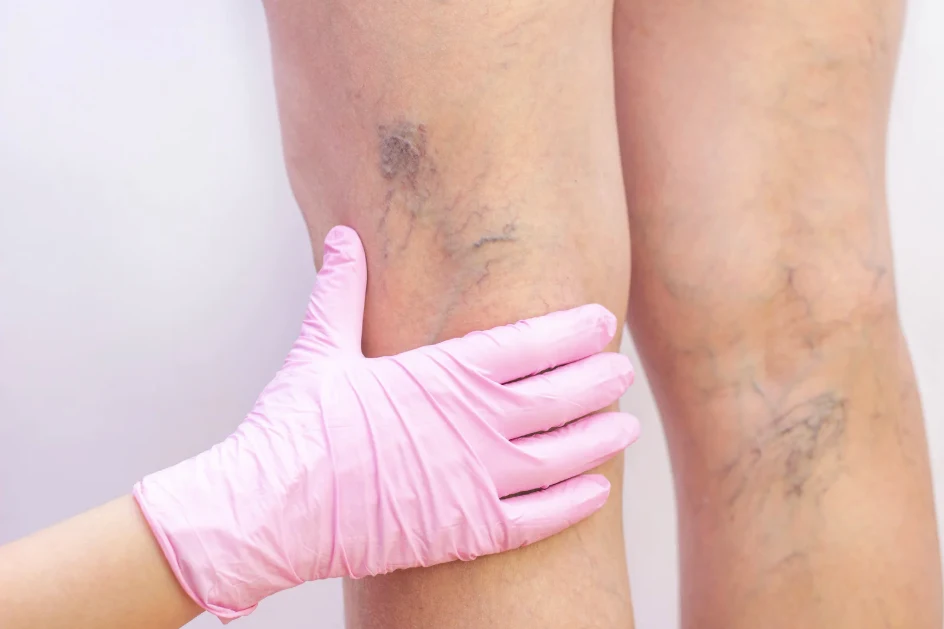
Fine red and purple veins have spread across your calves or thighs, more noticeable in shorts or by the pool, and you are wondering whether a laser can finally clear them. The answer is that the laser works well on some spider veins and barely touches others, depending on their size, depth and colour, and on whether a larger feeding vein sits underneath the skin driving the pattern.
Key Takeaways
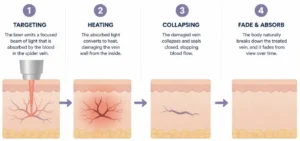
- Laser works on spider veins through selective photothermolysis, where light energy is absorbed by blood in the vein and converted to heat that seals it shut.
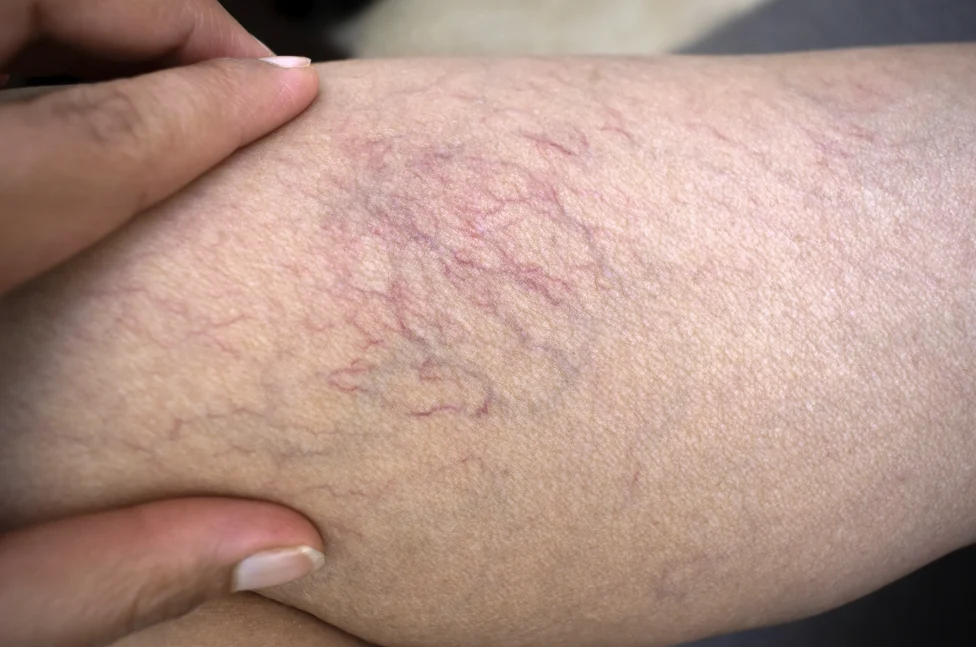
- It performs best on very fine, red-toned superficial veins, generally under 1mm to 2mm in diameter, and less reliably on larger blue-green veins.
- Most patients need two to four sessions spaced several weeks apart, with results building gradually rather than clearing instantly.
- Ultrasound-guided sclerotherapy is often preferred for larger reticular veins and any vein connected to an underlying feeding vein that laser cannot address effectively.
- Spider veins can recur if the feeding reticular vein beneath them is left untreated, which is why an accurate diagnosis before treatment matters as much as the treatment method itself.
What Happens When Laser Treats a Spider Vein
When a laser is directed at a spider vein, the light energy passes through the skin and is absorbed by haemoglobin in the blood within that vein. That absorbed energy converts to heat, which damages the vein wall enough to make it collapse and gradually be reabsorbed by the body over the following weeks.
Selective Photothermolysis Explained Simply
This principle is called selective photothermolysis. The laser wavelength is chosen specifically because blood absorbs it more readily than the surrounding skin, so the vein heats up while the tissue around it stays largely unaffected. It is the same underlying concept used across most vascular laser applications, refined here for the specific depth and diameter of leg telangiectasias.
How Many Laser Sessions Are Needed to Clear Spider Veins?
Most patients need between two and four sessions, spaced four to six weeks apart, to see substantial clearing in a treated area. A single pass is rarely enough, since not every vessel responds fully to the first exposure and some fade only gradually as the body reabsorbs the damaged vein.
Patients are often surprised that results are not immediate. Visible improvement typically builds over the weeks following each session rather than appearing on the day of treatment, which is worth knowing before comparing before-and-after photos found online.
Why Laser Works Well on Some Spider Veins and Not Others
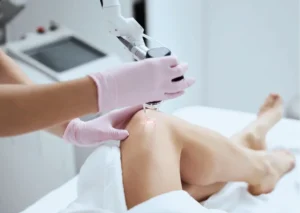
Laser is effective on fine, superficial vessels, but it is not a universal fix for every visible leg vein. Its effectiveness drops considerably once a vein sits deeper or has a wider diameter than the laser wavelength is suited to treat.
Vein Size, Colour and Location Matter
Very fine red telangiectasias close to the skin surface, typically under 1mm to 2mm, respond well because the laser’s target depth matches where they sit. Larger blue-green reticular veins run slightly deeper and carry more blood volume, making them harder for laser to close completely; these tend to respond better to ultrasound-guided sclerotherapy instead. Location matters too, since veins over bony areas such as the ankle are more prone to laser-related skin changes and are usually treated more conservatively.
Is Laser or Sclerotherapy Better for Spider Veins?
Neither is universally better. Laser tends to suit fine, superficial telangiectasias and small vessels where a needle would be difficult to place, while sclerotherapy is generally preferred for slightly larger veins and anything connected to a feeding reticular vein.
A prospective comparison of laser and sclerotherapy for lower extremity telangiectasias found broadly similar patient satisfaction between the two approaches, with sclerotherapy showing an advantage for larger-calibre vessels. A more recent systematic review and network meta-analysis of interventions for telangiectasias and reticular veins reached a similar conclusion: the right choice depends on vessel size and feeding vein involvement rather than a fixed hierarchy between the two techniques.
Do Spider Veins Come Back After Laser Treatment?
They can, particularly if the reticular vein feeding the treated area was not identified and addressed at the same time. Treating only the visible spider veins while leaving their source untouched is one of the most common reasons patients see new veins appear in the same spot within a year or two.
Why Untreated Feeder Veins Cause Recurrence
Spider veins are often just the visible endpoint of a slightly larger reticular vein sitting underneath the skin, feeding pressure into the surface vessels. If that feeder vein is not identified and treated, whether with sclerotherapy or another appropriate method, the surface veins it was supplying can refill, or new ones can form nearby. This is why a proper evaluation before treatment, rather than treating whatever is visible on the surface, tends to produce more lasting results.
Getting an Accurate Diagnosis Before Choosing a Treatment
Laser genuinely works on spider veins, but only within a specific size and depth range, and only when any underlying feeding vein has been accounted for. The most reliable way to know which category your veins fall into is a proper vascular assessment rather than choosing a treatment based on advertising alone.
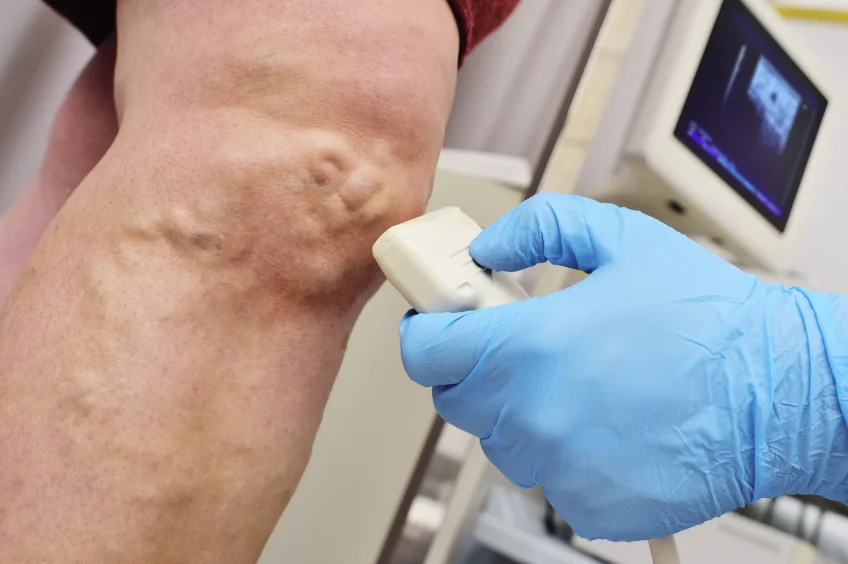
If you are considering treatment for spider veins, book a vascular assessment with duplex ultrasound at Vascular & Interventional Centre, so the specialist team can confirm which veins are feeding the problem before recommending a treatment path.